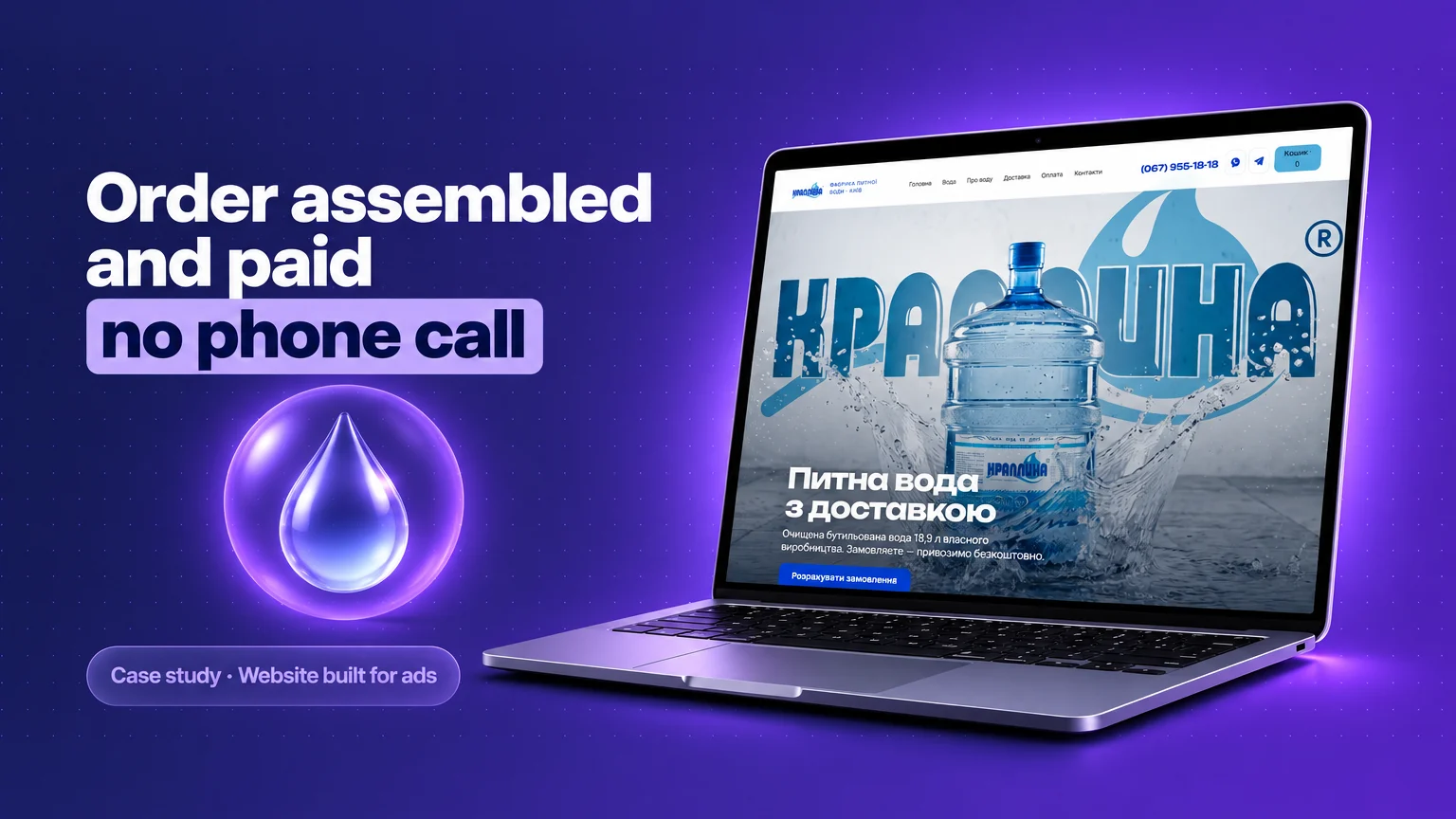
A drinking water service in Kyiv. The 18.9 L bottles are filled at the company's own plant and delivered by its own drivers to flats, offices, coffee shops and school canteens. Orders were already coming in two ways: by phone, and through the Telegram and Viber bot I had built earlier — pick the quantity, pay by card, or write to a dispatcher and ask about prices and terms.
The website could not do the same. A visitor arriving from search or from an ad had no way to reach the final number alone: the price per bottle drops as the order grows, a pump can be added to it, and the bottles themselves are lent against a deposit. Three different rules met in a single basket, and someone had to call back before the order even had a total.
What I built
I rebuilt the page around one calculator. A quantity slider switches the tariff while it moves and shows what the next step saves. Add-ons — a mechanical pump, a starter set for a first order — are checkboxes that recount the total on the spot.
The deposit deliberately stays outside the online payment. A bottle is not sold, it is lent, so that part is settled with the driver, and the card covers exactly what is actually being bought. Card payment runs through WayForPay, where Apple Pay and Google Pay sit above the card form, so a phone can close the order without typing card details.
What else stayed on the page
Only what an order needs: who the water is delivered to, the delivery window and the cut-off time, lab checks on every batch, and Google reviews. The rest is gone.
Conditions written down honestly
The bottle deposit, the exchange of another brand's bottles, weekend hours, same-day delivery only on weekday mornings — all of it used to surface in conversation. On the page these conditions are stated before payment, not after it: the customer sees what the card covers and what the driver will collect.
Prices appear where they belong — inside the calculator, once it is clear what goes into the order and on what terms it arrives.
Two ways in, one job
The bot stays for customers who never leave chat. The site now closes the ones who never open a messenger. Both routes do the same thing: let a person assemble the order and pay for it alone.
Why this matters for advertising
Paid traffic lands on a page with one job: assemble the order and take the payment. While the dispatcher does the arithmetic, every click has to be walked to a phone call. When the page does the arithmetic, the visitor sees the total and pays on the spot. That is why I built this page the way it is.
Live site: https://kraplyna.netlify.app/


