Your client asks ChatGPT who to go to. Will it name you?
I measure how often AI assistants recommend your business, or you as an expert, who they name instead of you, and what they have already made up about you. You see the result in numbers.
Fewer requests than before, and nothing is broken
You open your CRM or your calendar, and there are fewer bookings than a month ago. The ads are running, the website works.
Meanwhile your future client types into ChatGPT: "Recommend a reliable car repair shop near me." Or: "Recommend a therapist who works with anxiety." A few seconds later they get an answer: two or three names and a couple of sentences about each. Your name is not there. There is nothing further to scroll to, so they contact the ones that were named.
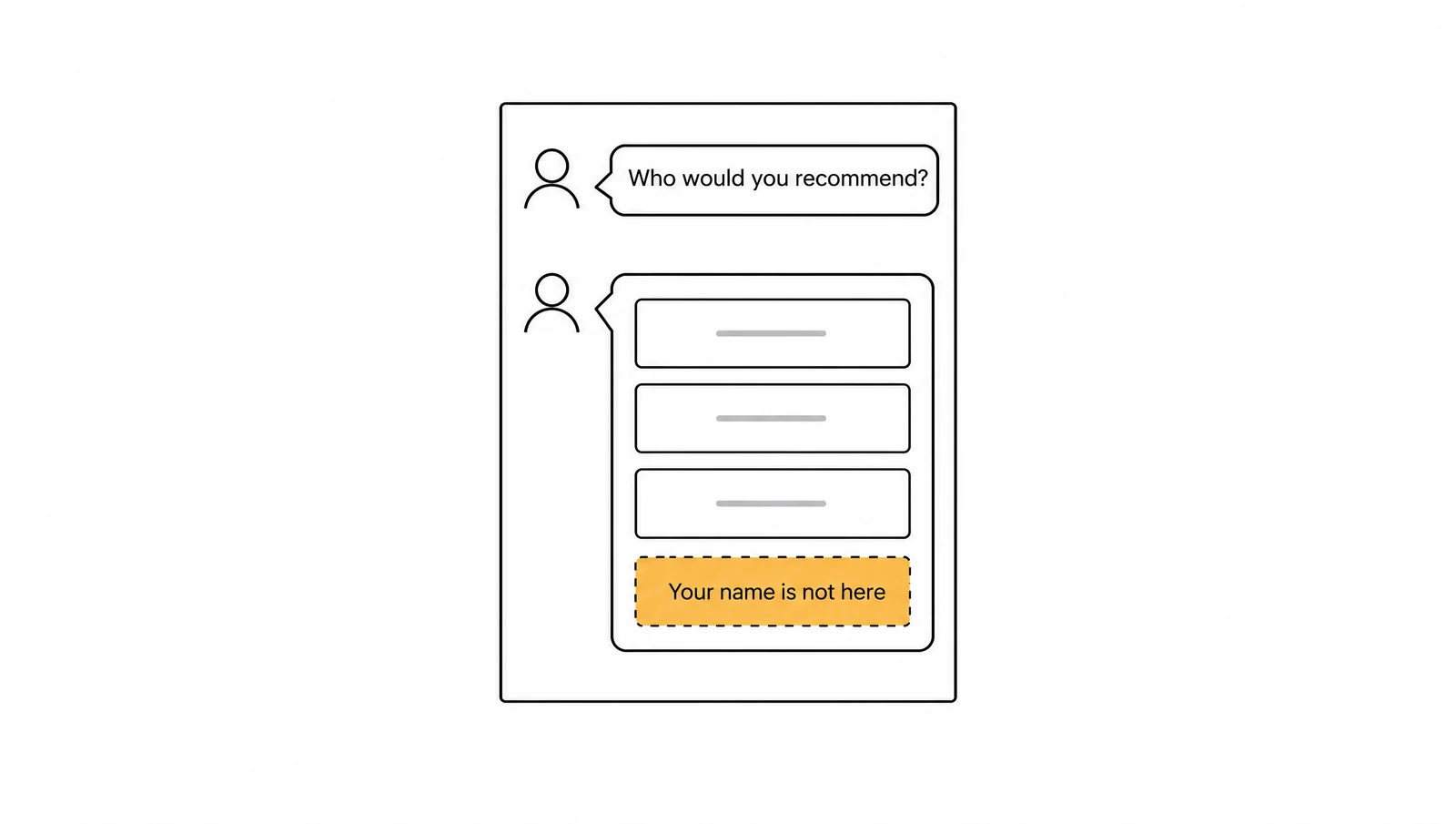
Try it right now. Open ChatGPT in a temporary chat, where it doesn't know your history, and ask it to recommend someone in your niche, using the words your client would use. I'll wait.
Who is checking, and why there are no promises
My name is Ievgen Kovalevskyi. I've been building websites and running ads for businesses since 2009, and now I measure what AI assistants say about businesses and experts. I consider "a guaranteed spot in ChatGPT" a lie, and I don't use the phrase. I don't promise spots. I show numbers.
Why you won't see this in your analytics
People used to open a search engine, look through a few websites and decide for themselves. Now they ask a question in a chat and get a ready answer with two or three names in it. Then they go to the ones that were named.
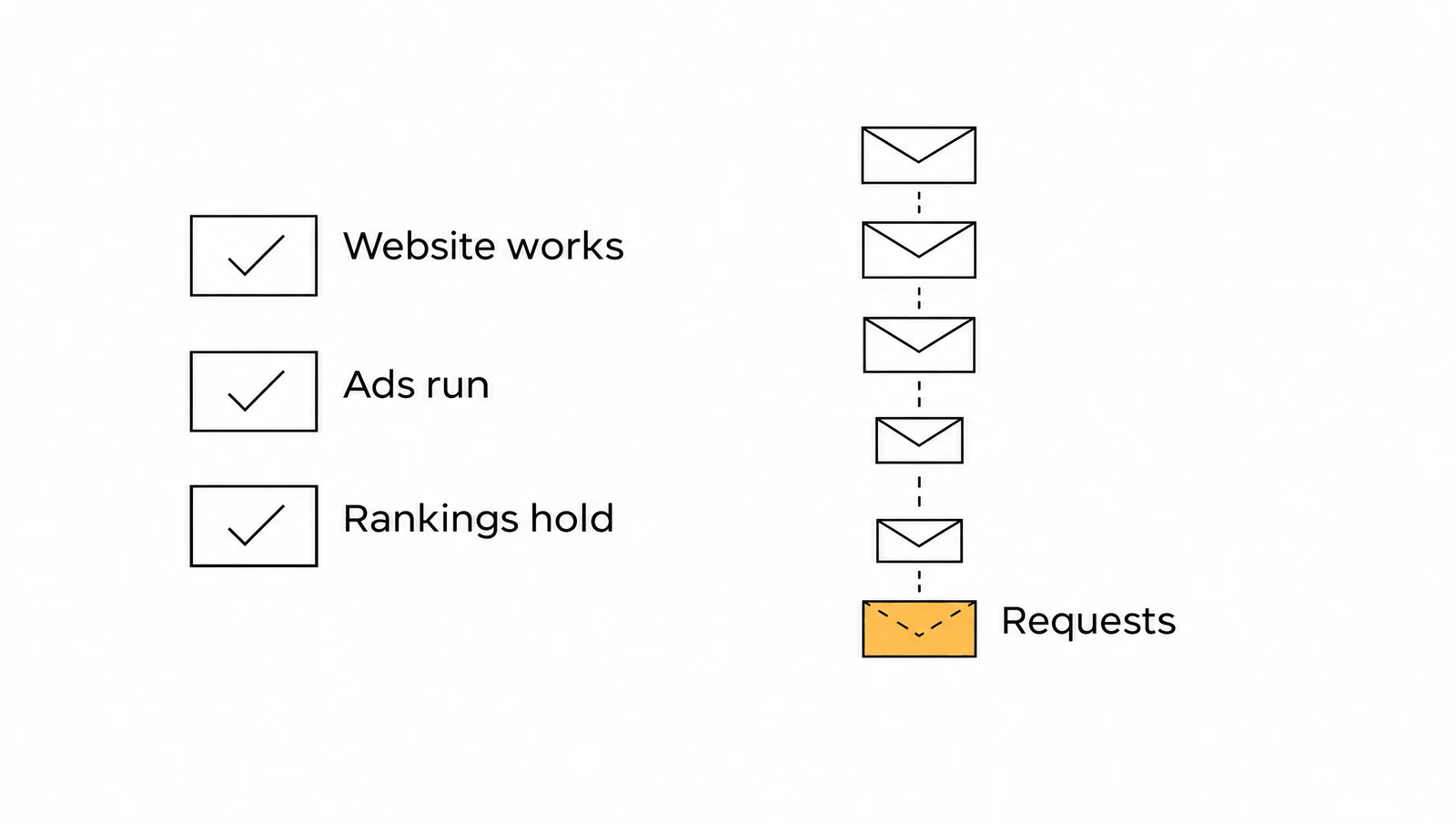
If you are not among them, you are not "on page two". You are simply not in that conversation.
There will be no signal either. Your search rankings hold, your ads run, and there are a few fewer requests than before, with nothing to explain why.
People find out about one more thing by accident. An AI assistant answers questions about a business even when it knows little about it, and fills in the rest on its own. That is how services you don't offer, someone else's address, an old price or someone else's experience end up attributed to you. Only someone who goes and looks can see it.
What you lose when an AI assistant recommends someone else
Behind the word "visibility" there are very concrete things. They leave you every day, and you don't see it anywhere.
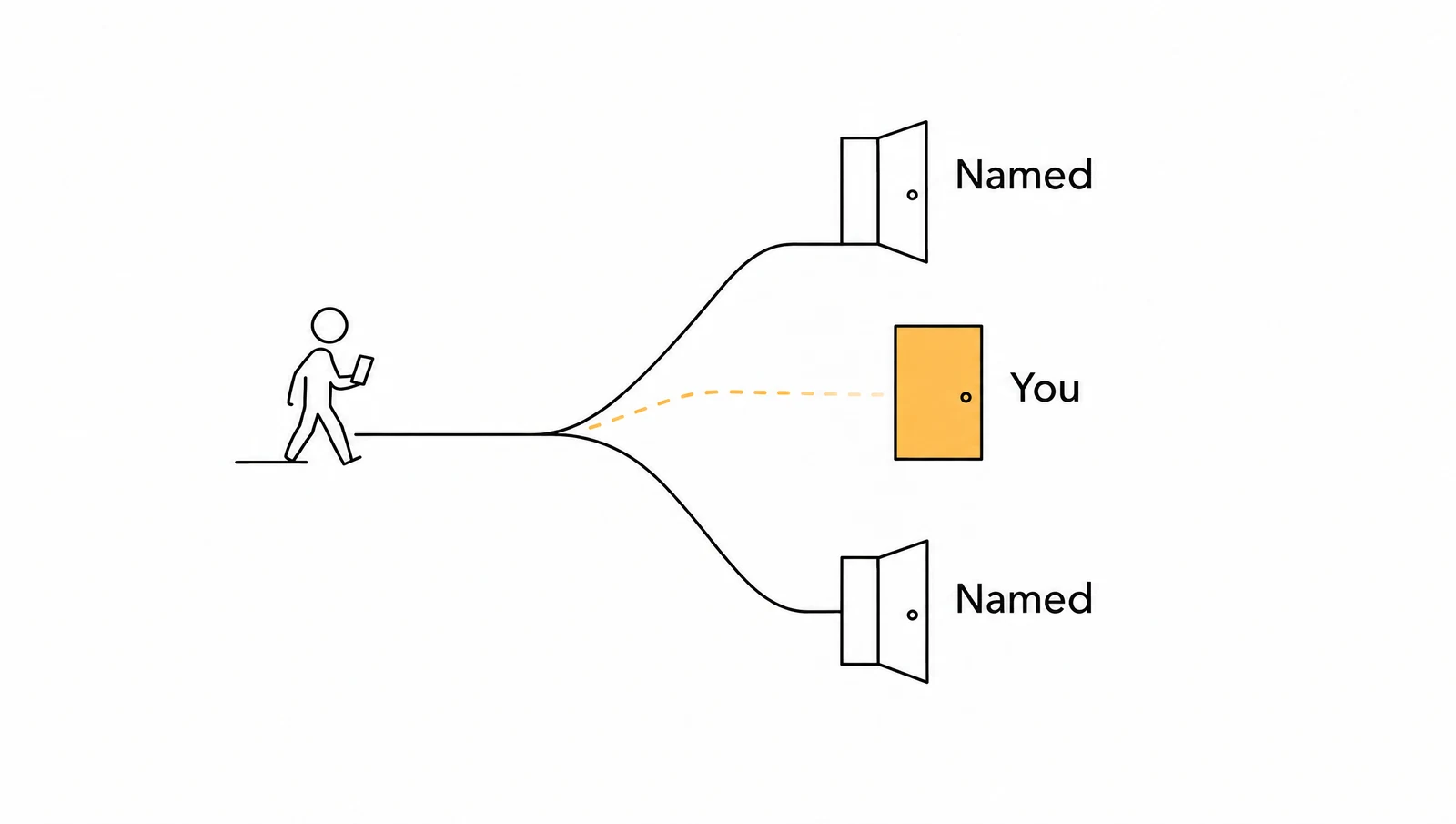
First, you lose the client who has already decided who to go to. A person who asks an AI assistant "who would you recommend" is usually ready to buy. They don't compare a long list; they pick from two or three names. A car repair shop loses the driver who needs the car fixed by tomorrow, and a lawyer loses the client who needs a consultation this week. These people never show up in your bounce statistics, because they never reach you.
Sometimes friends have already recommended you, and before calling, the person asks the AI: "What can you tell me about…?" If the answer is vague, inaccurate or brings up another name, the call may never happen. A dental clinic loses a patient who started to doubt. An expert loses a client who decided to "look at someone else first".
Even when the client does come, the first impression of you was formed by someone else. They have already read what the AI said about your niche and whom it called the best, so the conversation starts with a comparison to a competitor they were recommended earlier. A clinic explains why it is no worse than the one that was named. A coach argues that their approach is just as strong.
Your position in the price conversation gets weaker too. The competitor was recommended and you were not, so to the client you are just another option. Then the conversation is about who is cheaper rather than about why it should be you.
Another loss is the truth about you. When an AI assistant knows little about you, it fills in the gaps: a service you don't offer, an address you moved away from long ago, an old price. It may mix you up with a namesake or a similar brand. The client believes the answer, and you don't even see it, because nobody asks you.
What you have already invested loses value as well. Money and years went into your website, articles, profiles, reviews and posts. If the AI doesn't use any of it in its answer, then for the person asking the chat it might as well not exist. An online store with a strong catalogue and an expert with years of posts can be equally invisible.
And the least visible part: while you don't know what AI assistants say about your niche, someone else has already become "the one they recommend". Every day they get requests that could have been yours.
"But I am doing something"
I know. Here is what people usually try and how it ends.
A business owner runs ads, updates the website, asks clients for reviews. An expert writes posts, films reels and stories, appears on live streams. Some hire an agency that reports on reach but not on whether an AI assistant names you. That is a lot of work, and when asked "who would you recommend?", the AI still names others.
Some buy a course on promotion and put a small part of it into practice, because knowing is not the same as seeing the numbers. Some rely on word of mouth, which is feast or famine. Meanwhile the AI hands your clients to those it knows better.
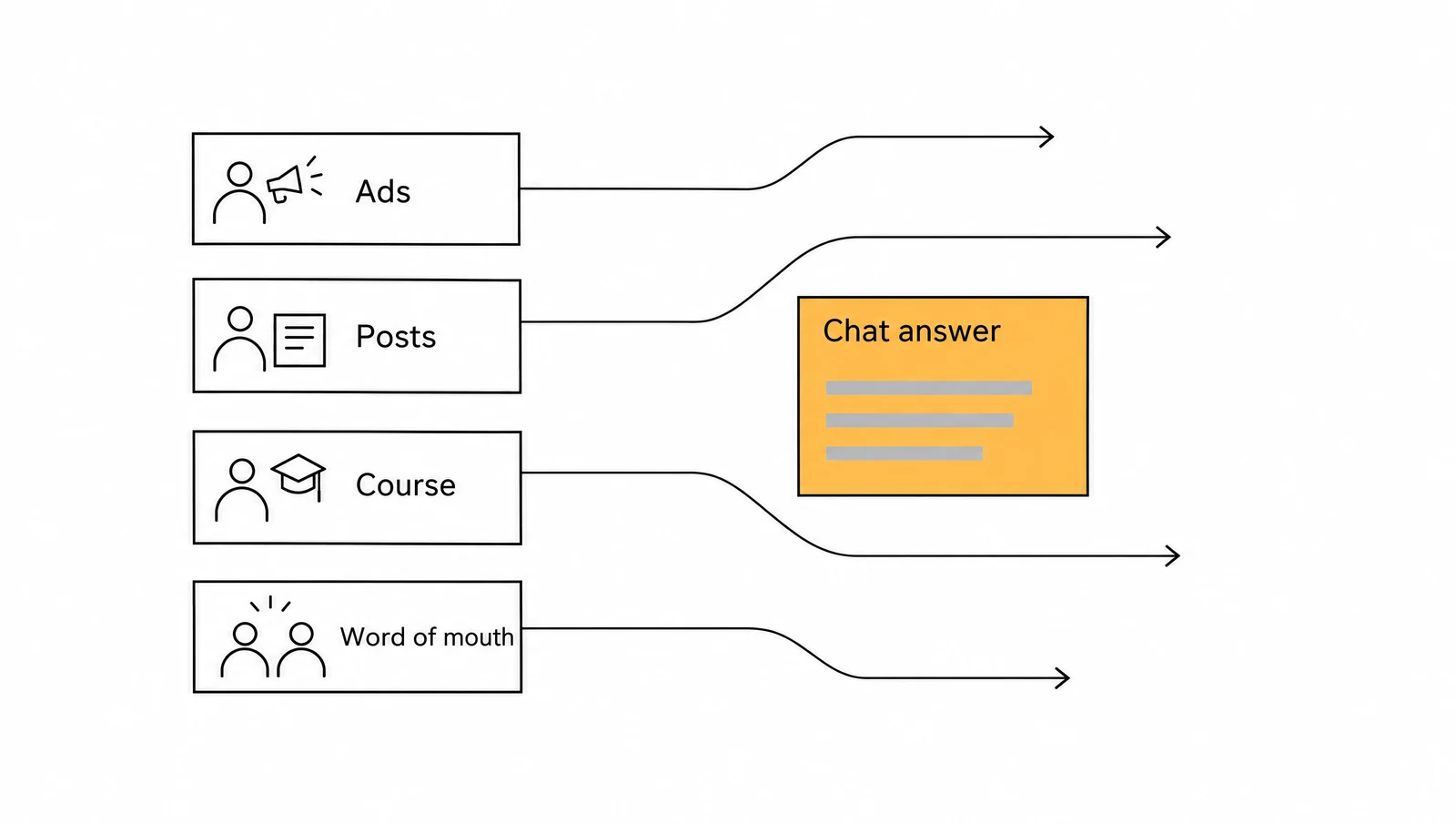
You are not doing anything badly or too little. You are simply on a route that AI assistants don't take.
Why "I asked ChatGPT myself" proves nothing
Almost everyone has tried this, and almost always in a way that makes the result meaningless.
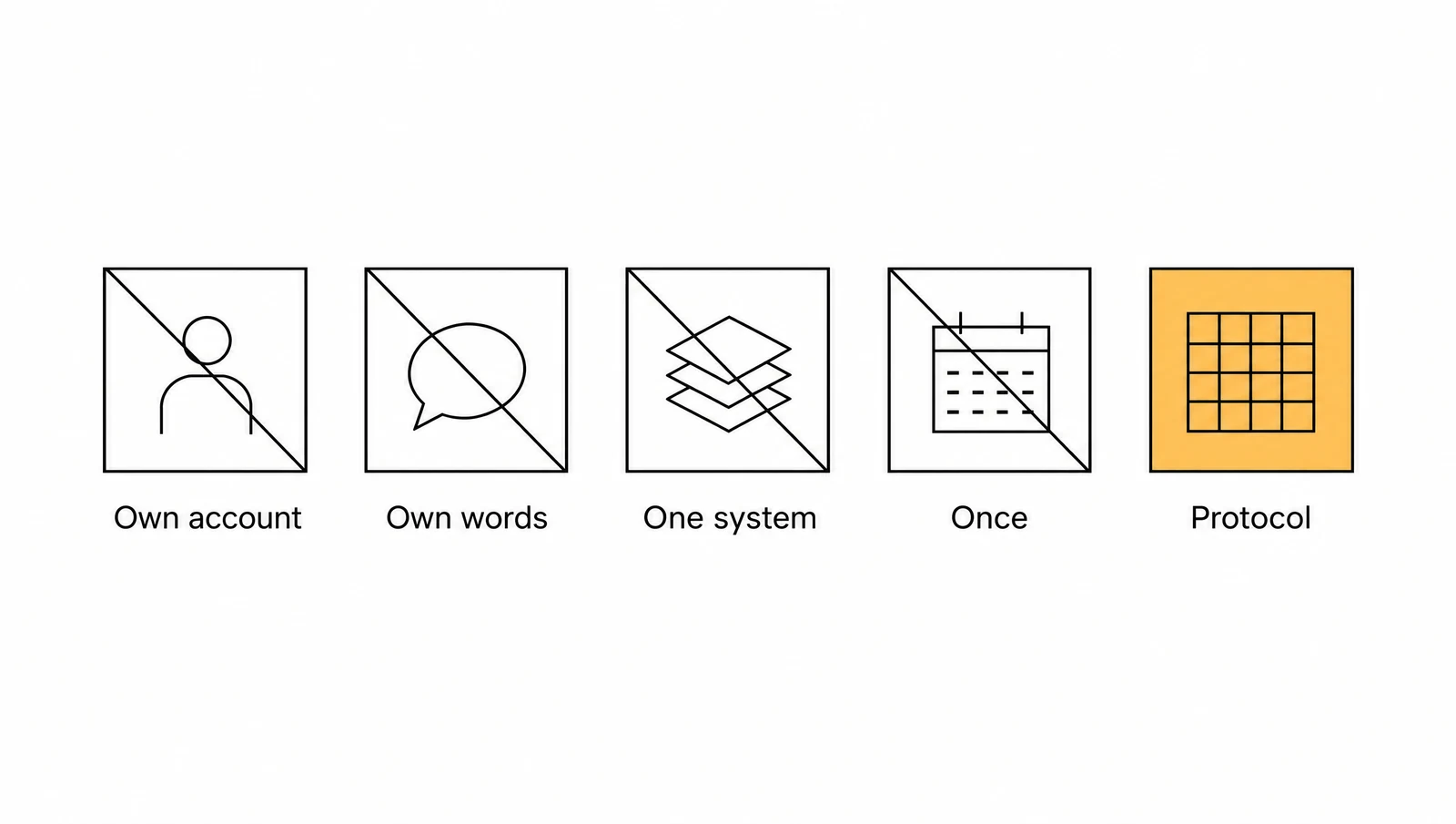
- You asked from your own account. The model saw your history and that you had already asked about yourself, so it played along.
- You asked in your own words. You know what your service is called; your client writes it differently.
- You asked one AI assistant. Different assistants take data from different sources and answer differently.
- You asked once. The same model gives different answers to the same question today and tomorrow.
One question is not a measurement. It's like taking a temperature with the palm of your hand.
Clients no longer look at shop windows
Clients used to walk down the street and look into shop windows; that was search. Now they ask an acquaintance: "Where should I go?" The acquaintance names two or three places. That acquaintance is an AI assistant.
One question remains: will it name you.
How I measure where you stand now
"Point A" is a baseline measurement of your visibility in three AI assistants. It is a protocol, not a single question. After you submit a request, you answer a short survey in Telegram, and I get to work.
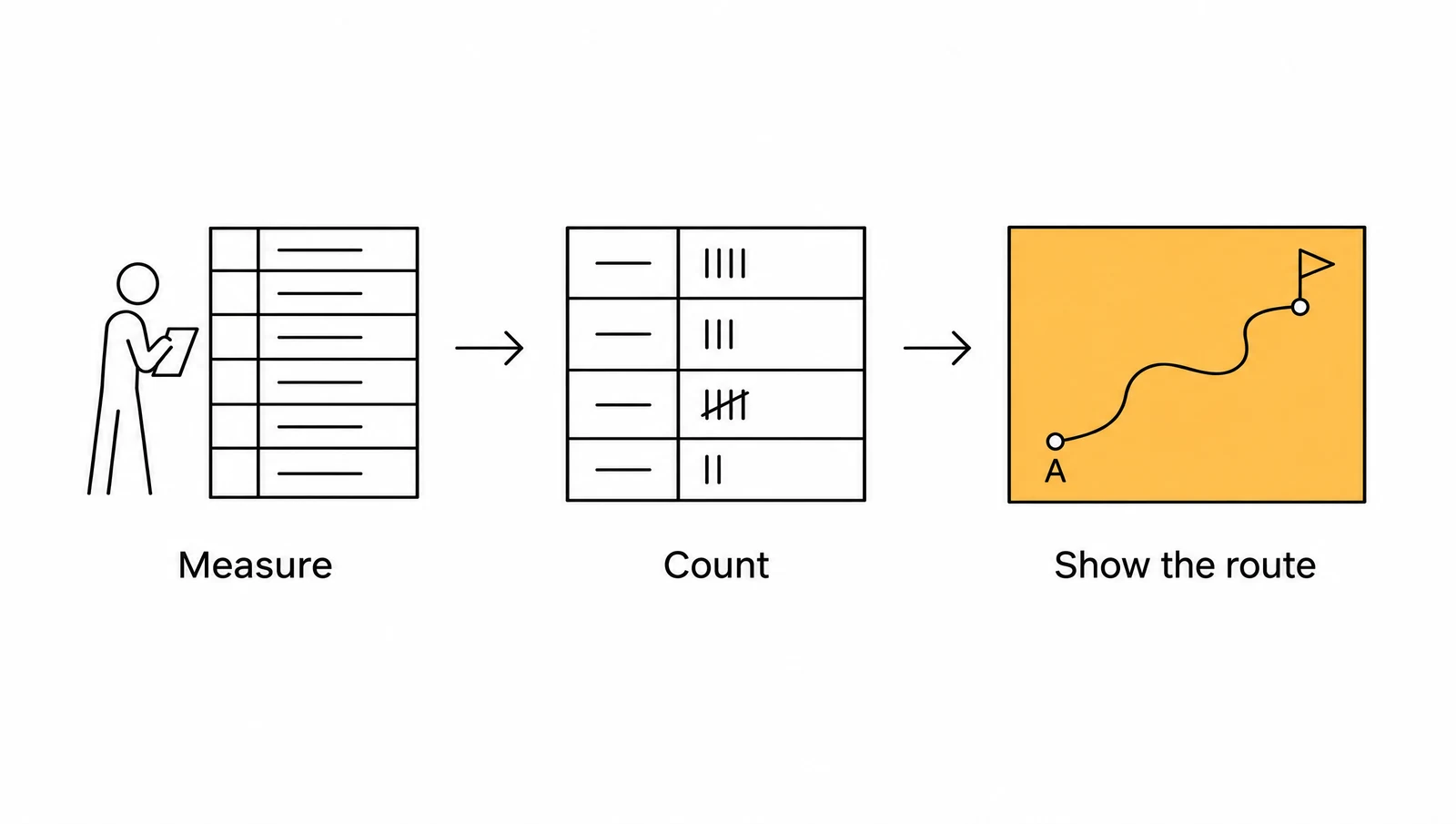
1. I measure.
I study your business or practice and your answers, put together 8–12 test queries in your clients' words and record the answers of three AI assistants in incognito mode. This is how you look to someone who has never heard of you.
2. I count.
I record how many times you were named and how many times competitors were, who exactly is named instead of you, and where you get mixed up with others. That is your Point A.
3. I show you the route.
On a 30–60 minute call I show you the numbers and walk you through an action map: what to change so AI assistants name you more often.
What you will know after the measurement
You will know how often AI assistants recommend you, whom they name instead of you, and where they confuse you with others or say untrue things about you.
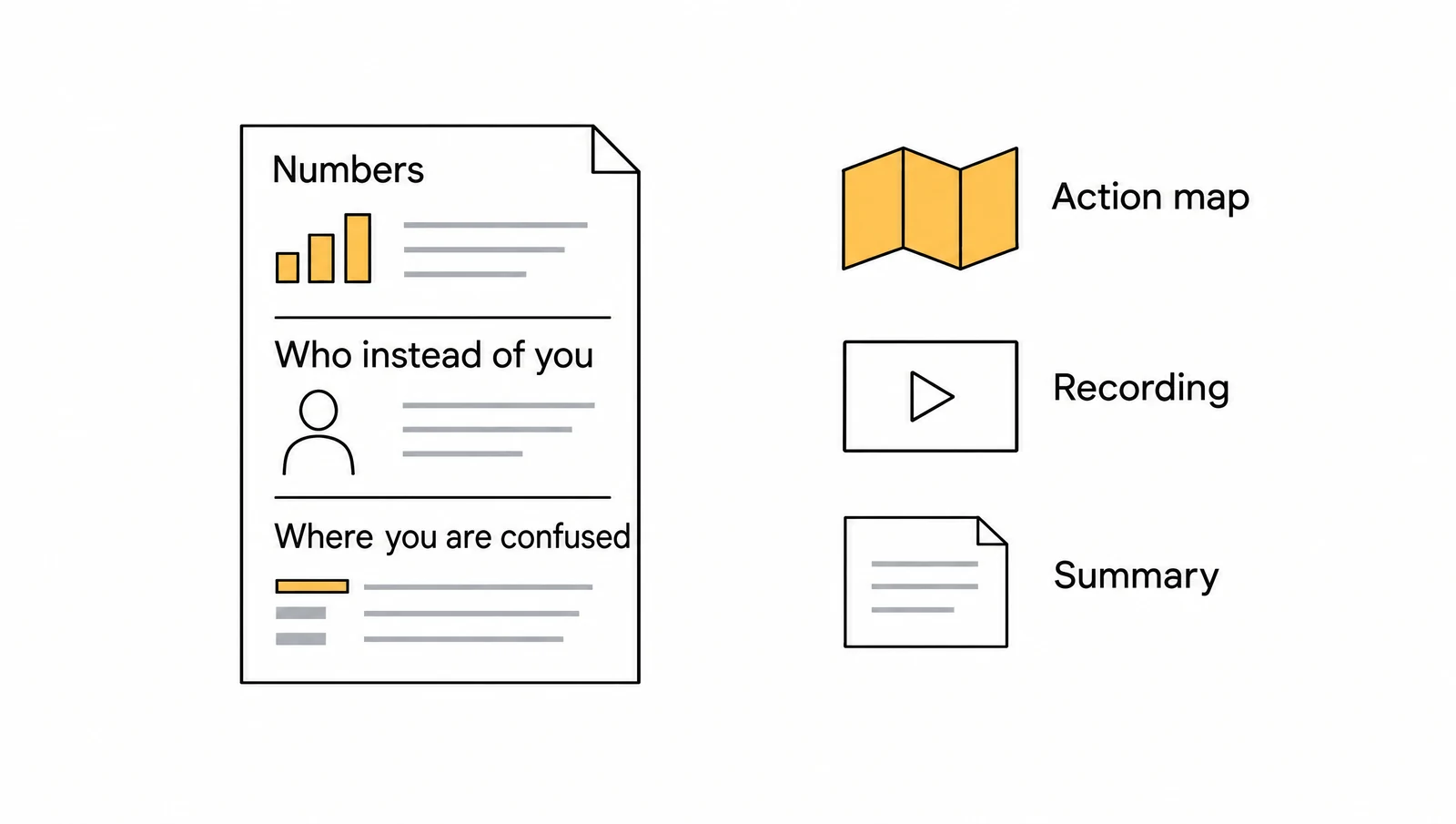
So that nothing gets lost, you keep:
- an action map that spells out what to do so AI assistants name you more often;
- the call recording, which you can come back to at any time;
- a written summary of the call with step-by-step actions. You can upload it to the same ChatGPT and ask it to turn it into a plan.
What it costs to find your Point A
A full AI visibility audit with me costs €129. Right now I'm testing a new format: the same measurement, done through my AI agent. It's faster, so it's cheaper.
That's why "Point A" costs€29right now.
There are only a few spots, because I do every measurement personally. When they run out, the price goes back to normal.
What "Point A" does not include
"Point A" is a diagnosis. It shows where you stand now but doesn't change anything.
Fixing what was found: the website, profiles, articles, publications. That is separate work.
Technical changes to your website. I'll show you what gets in the way; your developer does the work.
A repeat measurement. "Point A" captures one point in time; you see the trend when the measurement is repeated the same way.
Ads, classic SEO and link building. These are separate services.
You can take just the measurement and then work on your own or with your contractor. That is a normal scenario.
What I don't promise, and what I guarantee
Nobody can guarantee you a spot in ChatGPT. I won't either, because it would be a lie.
I don't promise that you'll start getting named after the measurement: it shows what is there now. And I don't promise pleasant numbers. If you are not in a single answer, that's what the result will say, and that is exactly what you can work with.
What I do guarantee: if after the measurement you say "I already knew this", I'll refund the €29.
You keep the action map and the call recording.
Who won't get anything out of it
This measurement isn't for everyone. That's why it starts with a request and a short survey in Telegram. I'll look at your business or practice and tell you honestly whether the measurement will show you anything new. If it won't, I'll say so and won't take your money.
Questions from business owners and experts
How much of my time will it take?
A few minutes for the survey in Telegram and a 30–60 minute review call. I do the rest.
Can I do this measurement myself?
Technically yes, these chats are available to everyone. The difference is the procedure: incognito, queries in your client's words, three AI assistants and the same structure that can be repeated later. Without it you get an impression, not a measurement.
I run a business, I'm not an expert (or the other way round). Is this for me?
Yes. The first survey question asks you to tell me about yourself or your business. After that, the questions and the test queries are built around your niche: they are different for a car repair shop and for a psychologist.
What happens after I fill in the form?
You'll land on a page with a Telegram bot button. The bot asks a few short questions, and it becomes clear whether the measurement fits you. If it does, the next step is the €29 payment and choosing a time for the call.
What if everything turns out to be fine?
That is a result too. You'll have a recorded baseline to compare against later.
How is "Point A" different from the full €129 audit?
"Point A" is a baseline measurement: 8–12 queries in three AI assistants, the numbers, who is named instead of you, and an action map on the call. The full audit goes further: a separate interview and a business passport, more systems, a check of whether your website is open to AI, and a detailed report.
Will I have to buy anything afterwards?
No. The numbers and the map stay with you, and you're free to do whatever you want with them.
Can I pay in my local currency?
Yes. The price is set in euros; the amount in your currency is converted at your bank's or payment system's rate on the day of payment.
Find out whether AI assistants recommend you
- Leave a request in the form below.
- Answer a few questions in Telegram, and I'll check whether the measurement fits you.
- If it does, the next step is the €29 payment, and you pick a convenient time for the call.
Fill in the form, and I'll send you a short survey in Telegram. If the measurement fits you, the next step is the €29 payment and choosing a time for the call.
One last question
Ask ChatGPT in a temporary chat whom it would recommend in your niche. If you are not there, requests are already going to others. The measurement will show how many, and the map will show what to do about it.
What will change in a year if AI assistants divide your niche without you?